Saturday, July 26, 2014


Aston Martin confirms bespoke Super Saloon for Middle East
Luxury supercar maker Aston Martin has confirmed a bespoke product programme for a new super saloon that will see the revival of the Lagonda nameplate in a strictly limited series. As has traditionally been the case, the Lagonda badge will once again sit on a luxurious and exclusive super saloon. The luxury super saloon revives the Lagonda ethos of ‘the finest of fast cars’ and will be offered exclusively in the Middle East, as a result of specific market demand.
The return of Lagonda follows in the wake of other headline-grabbing projects such as the One-77 hypercar, V12 Zagato and last year’s CC100 Speedster Concept – then seen as the ultimate Q by Aston Martin car – which started out simply as a centenary celebration design concept and, as a result of exceptional demand, later turned into two customer commissions.
Based on the brand’s existing flexible VH architecture, the new car draws inspiration from the highly sought-after William Towns-designed Lagonda of 1976 and features many of the same engineering techniques seen in modern Aston Martin sports cars such as the use of carbon fibre in the body panels. The new super saloon will be offered for sale by invitation only and, while precise pricing details remain confidential, the asking price will be commensurate with the car’s exclusivity, quality and luxurious nature.
Expressing his views on the new upcoming Lagonda, Aston Martin Design Director Marek Reichman said, “The debut of this luxury super saloon in the Middle East market will be an exciting moment not only for Aston Martin, but for discerning customers who are seeking the ultimate in luxury and personalisation.”
“The new model, like its exclusive siblings the One-77 and V12 Zagato, has been created as a piece of exceptional automotive art. It has been designed and developed entirely in keeping with the spirit and ethos of previous Lagonda super saloons – notably the William Towns Lagonda – and as a tribute to this car it proudly bears the Lagonda nameplate.”
The only question remains: Why just the Middle East? We are pretty sure there are non-oil digger billionaires who would be happy to buy the Lagonda. What do you think? Share your thoughts and comments below.

New Cars to Be Launched in August 2014
Here's a list of cars that are expected to be launched in August 2014:

1. Audi A3 Sedan
To be priced around Rs. 25 lakh, the A3 compact sedan will be Audi's most affordable vehicle in India. The car made its Indian debut at the 2014 Delhi Auto Expo in February, while media drives were conducted earlier this month. Though there's no direct competitor for the A3 for now, it will find competition in the upcoming Mercedes-Benz CLA Class. Also if the car is priced competitively, it will eat into the sales of D2 segment cars like Honda Accord, Volkswagen Passat, Toyota Camry, Hyundai Sonata, Skoda Superb, etc.
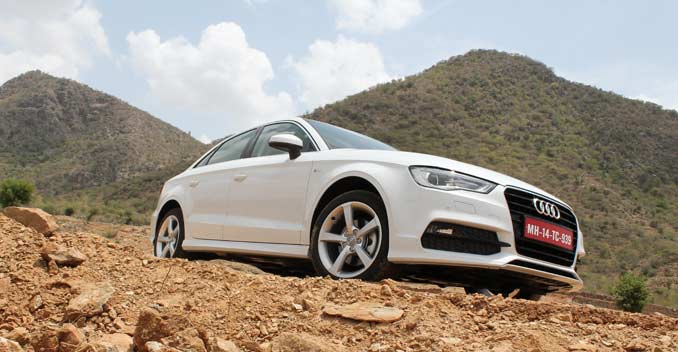
Though the A3 will initially be launched in the sedan avatar, rumour has it that the company is considering bringing in the hatchback and sportback version as well. The compact sedan will be offered with two engine options: the 1.8-litre TFSI petrol and the 2.0-litre TDI diesel, mated to a 6-speed S-tronic dual-clutch transmission.
Launch: August 7, 2014
Expected Price: Around Rs. 25 lakh
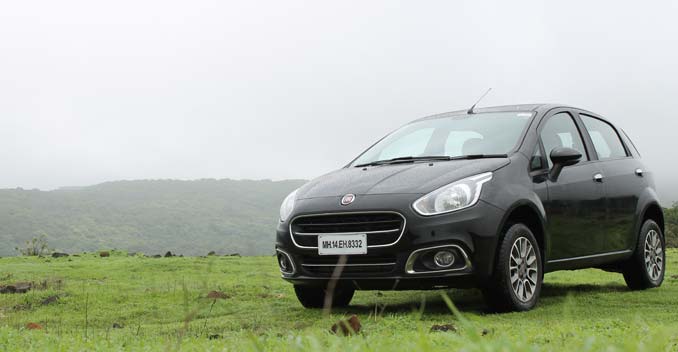
2. 2014 Fiat Punto Evo
Fiat India's flagship hatchback, the Punto is now all set to receive a major mid-life makeover. While there are no mechanical upgrades, the car has received several cosmetic changes that give it a fresh look. The front fascia of the new Punto Evo looks has taken its inspiration from the Avventura Concept showcased at the 2014 Auto Expo. It gets gets new blacked out headlamps, a rounded corned rectangular shaped grille, a revised bumper with trapezoidal shaped fog lamp with chrome-lined housing. The side profile of the updated Punto remains almost unchanged, though the new set of alloy wheels give it a sporty appeal.
Launch: First half of August
Expected Price: Rs. 4.5 lakh - R 6.5 lakhs.
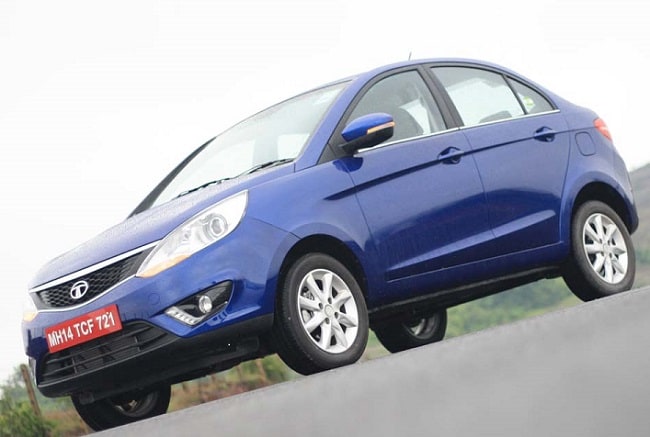
3.Tata Zest
The Tata Zest is undoubtedly one of the most awaited vehicles of the year since it is the first from Tata's new-breed of global cars. What makes it an even more special car is the fact that it will enter the country's most competitive segment, the entry-level sedan, which already has some really capable cars like Maruti Swift Dzire, Hyundai Xcent and Honda Amaze. The Zest will be made available with two engine options : the 1.2-litre Revotron petrol 84bhp, 140Nm and 1.3-litre multijet diesel 89bhp, 200Nm.
Launch: Second or Third Week of August
Expected Price: Rs. 4.75 lakh - Rs. 7.50 lakh
4. New 2014 Hyudai i20
Hyundai's next new product for India is expected to be the next-generation i20, which has been spotted several times during its test-runs in India. The car is expected to make its debut in India in August 2014, even before its unveiling at the 2014 Paris Motor Show.

The spy shots suggest a host of fresh elements - a much better side profile with more synchronized Fluidic design, brake lights with LED elements, differently designed air-dams, swept back headlamps and new ORVMs, which give it an entirely new design. The rear profile too will receive 'boomerang' shaped tail lights. There could be a few cosmetic changes inside the cabin as well.
Launch: August-September 2014
Expected Price: Rs. 4.80 lakh - Rs. 8.00 lakh
Lenovo K920 Vibe Z2 Pro Specifications Confirmed Ahead of August 5 Launch

Lenovo had unveiled its latest flagship, the K920, at the Mobile Asia Expo in Shanghai, last month. The company has now announced August 5 launch date, along with the full specifications of the device, which will be sold as the Vibe Z2 Pro.
Lenovo's Chief Marketing Officer for China, Arthur Wei, on Friday posted the specifications along with a selfie showing of the the devices' back, on his Weibo account. The pricing and availability of the Lenovo K920 is expected to be revealed at the launch.
According to Wei's post, the dual-SIM Lenovo K920 is said to be the successor of Lenovo's flagship Vibe Z and will be sold as Lenovo Vibe Z2 Pro. It runs Android 4.4 KitKat with Lenovo's Vibe UI 2.0 on top.
The Lenovo Vibe Z reached the Indian market earlier this year, and was launched at Rs. 35,999. The smartphone at launch ran Android 4.3 Jelly Bean out-of-the-box.
The Lenovo Vibe Z2 Pro of K920 will feature a large 6-inch QHD (1440x2560 pixel) display. It will pack a 2.5GHz quad-core Qualcomm Snapdragon 801 processor coupled with 3GB of RAM. Front camera on the device will be 16-megapixel with dual-LED flash and optical image stabilization, while secondary front facing camera will be 5-megapixel.
Internal storage on the device is listed for 32GB, but Wei didn't mention any microSD card expandability. The Lenovo K920 is also said to come with 4G LTE support. The large screen smartphone will have a massive 4000mAh battery, and measures 156x81.3x7.7mm.
Last month, a Chinese publication had listed the specifications of the Lenovo K920, which included almost same specifications as revealed by Lenovo's Chief Marketing Officer.
Is India Ready For Electric and Hybrid Vehicles?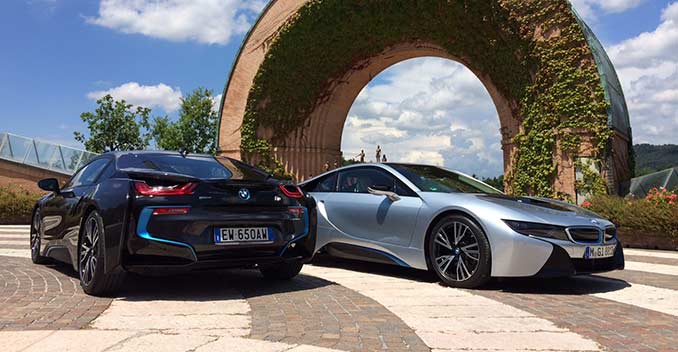
After venturing into the electric hybrid segment in India, BMW is now getting ready to bring second its offering in this segment. The company intends to bring the i8 plug-in hybrid supercar to India by the end of this year. Unveiled earlier this year at the 2014 Delhi Auto Expo in Greater Noida, the vehicle will be brought to India as a completely built unit (CBU). The electric-hybrid segment in India has scant offerings since India doesn't respond too well to such vehicles, primarily due to the lack of proper infrastructure.Since they are brought to India via the CBU route, such vehicles end up attracting heavy excise duty that consequently leads to a hefty price tag. Launched yesterday in India, BMW 7 Series ActiveHybrid has been priced at Rs. 1.35 crores. (ex-showroom, Delhi). Even low priced electric vehicles, like Mahindra Reva e2odo not find many takers; Toyota also offers the Prius and Camry hybrid in India. Despite a handful of good products, the sales of electric-hybrid vehicles are almost non-existent in the domestic market. However, efforts are still being made to encourage the sales of electric and hybrid vehicles in India.
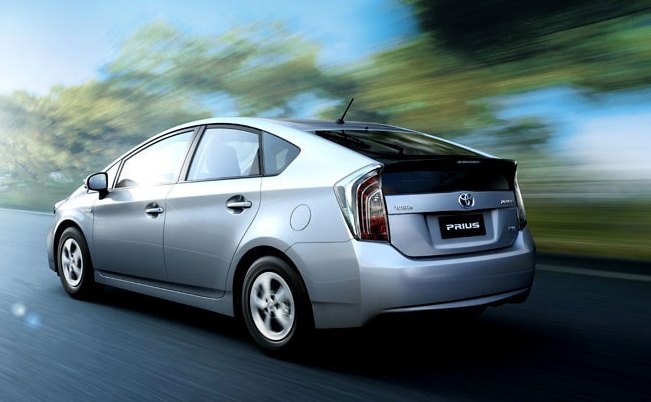
Government of India is chalking out a scheme to encourage sales of EVs and hybrid vehicles in India, which would involve a colossal investment of Rs.s. 14,000 crore.The subsidy will be a proportion between the cost of fossil fuel required for running a car as against that of an electric or hybrid vehicle. The Department of Heavy Industry has suggested that owners of pure electric vehicles should get a maximum subsidy of 35 per cent, while customers who opt for hybrid vehicles that can run up to 15kms at one go should get benefit of 25 per cent.
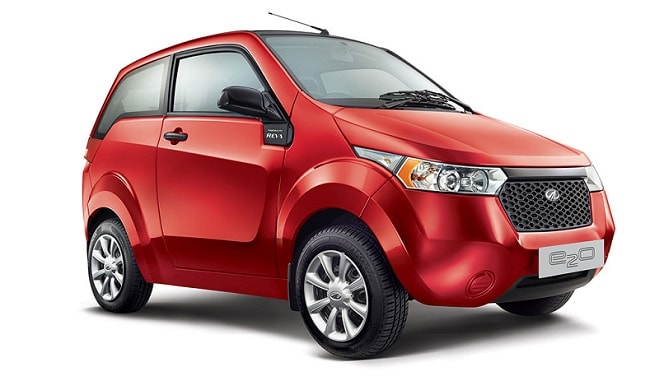
The Government of Delhi is also contemplating offering a subsidy to those who wish to switch to electric cars by adding a special conversion kit in their car. For the ease of customers, government is also mulling the installation of public charging points. However, no official announcement has been made about this subsidy yet since it is still in a nascent stage.
Dell, BlackBerry downplay threat from Apple-IBM alliance

Toronto: IBM Corp`s recent move to partner with Apple Inc to sell iPhones and iPads loaded with corporate applications has excited investors in both companies, but two rivals say they are unperturbed for now.
Top executives at Dell and BlackBerry Ltd scoffed at the threat posed by the alliance this week, arguing the tie-up is unlikely to derail the efforts of their own companies to re-invent themselves.
"I do not think that we take the Apple-IBM tie-up terribly seriously. I think it just made a good press release," John Swainson, who heads Dell`s global software business, said in an interview with Reuters in Toronto on Thursday.
PC maker Dell and smartphone maker BlackBerry are in the midst of reshaping their companies around software and services, as the needs of their big corporate clients morph.
Swainson, who spent over two decades in senior roles at IBM, said, "I have some trouble understanding how IBM reps are going to really help Apple very much in terms of introducing devices into their accounts. I mean candidly, they weren`t very good at doing it when it was IBM-logoed products, so I do not get how introducing Apple-logoed stuff is going to be much better."
While conceding that Apple products hold more allure, Swainson said they lack the depth of security features that many large business clients like banks covet.
IBM and Apple could not immediately be reached for comment.
BlackBerry Chief Executive John Chen similarly downplayed the threat of the alliance in an interview with the Financial Times on Thursday, likening the tie-up to when "two elephants start dancing."
NO COMMENT ON POSSIBLE ALLIANCE
Dell and BlackBerry declined to discuss whether they would consider teaming up, but some analysts, bankers and others have argued in the past that a partnership between the two underdogs potentially made sense.
Texas-based Dell has a huge sales team, vast network of business clients and is focused on growing its security and device management capabilities, long strong suits for BlackBerry.
The Canadian company is building on its heritage by adding capabilities to manage not just BlackBerry, but iOS-, Android- and Windows-based devices on its infrastructure.
"Dell`s always been in a partnership-driven model. As Dell has evolved it has focused on some pieces of the equation, but not all," said Swainson, adding that the need to broaden partnerships is growing, but declining comment on a potential tie-up with BlackBerry.
Chen told the Financial Times that BlackBerry was in early discussions with some companies about working together in parts of the enterprise market, but did not name them.
Whether a BlackBerry-Dell partnership will materialize is unclear for now.
Initial speculation about a tie-up between the two began a year ago, when both players were exploring buyouts. At the time, one source told Reuters that BlackBerry had held talks with private equity firm Silver Lake Partners about collaboration in enterprise computing.
Silver Lake, along with Dell`s founder, Michael Dell, were at the time in the midst of taking Dell private.
At the time, the source said if the buyout succeeded, one option was a collaboration with BlackBerry in mobile computing.
Both Swainson and Chen were senior advisors with Silver Lake before moving into their roles with Dell and BlackBerry.
BlackBerry, under the leadership of Chen, has been busy forging alliances and earlier this week announced it was going to allow third-parties to host its device management services.
Top executives at Dell and BlackBerry Ltd scoffed at the threat posed by the alliance this week, arguing the tie-up is unlikely to derail the efforts of their own companies to re-invent themselves."I do not think that we take the Apple-IBM tie-up terribly seriously. I think it just made a good press release," John Swainson, who heads Dell`s global software business, said in an interview with Reuters in Toronto on Thursday.
PC maker Dell and smartphone maker BlackBerry are in the midst of reshaping their companies around software and services, as the needs of their big corporate clients morph.
Swainson, who spent over two decades in senior roles at IBM, said, "I have some trouble understanding how IBM reps are going to really help Apple very much in terms of introducing devices into their accounts. I mean candidly, they weren`t very good at doing it when it was IBM-logoed products, so I do not get how introducing Apple-logoed stuff is going to be much better."
While conceding that Apple products hold more allure, Swainson said they lack the depth of security features that many large business clients like banks covet.
IBM and Apple could not immediately be reached for comment.
BlackBerry Chief Executive John Chen similarly downplayed the threat of the alliance in an interview with the Financial Times on Thursday, likening the tie-up to when "two elephants start dancing."
NO COMMENT ON POSSIBLE ALLIANCE
Dell and BlackBerry declined to discuss whether they would consider teaming up, but some analysts, bankers and others have argued in the past that a partnership between the two underdogs potentially made sense.
Texas-based Dell has a huge sales team, vast network of business clients and is focused on growing its security and device management capabilities, long strong suits for BlackBerry.
The Canadian company is building on its heritage by adding capabilities to manage not just BlackBerry, but iOS-, Android- and Windows-based devices on its infrastructure.
"Dell`s always been in a partnership-driven model. As Dell has evolved it has focused on some pieces of the equation, but not all," said Swainson, adding that the need to broaden partnerships is growing, but declining comment on a potential tie-up with BlackBerry.
Chen told the Financial Times that BlackBerry was in early discussions with some companies about working together in parts of the enterprise market, but did not name them.
Whether a BlackBerry-Dell partnership will materialize is unclear for now.
Initial speculation about a tie-up between the two began a year ago, when both players were exploring buyouts. At the time, one source told Reuters that BlackBerry had held talks with private equity firm Silver Lake Partners about collaboration in enterprise computing.
Silver Lake, along with Dell`s founder, Michael Dell, were at the time in the midst of taking Dell private.
At the time, the source said if the buyout succeeded, one option was a collaboration with BlackBerry in mobile computing.
Both Swainson and Chen were senior advisors with Silver Lake before moving into their roles with Dell and BlackBerry.
BlackBerry, under the leadership of Chen, has been busy forging alliances and earlier this week announced it was going to allow third-parties to host its device management services.
Hot launches: Smartphones of July 2014
Stunning design and build
The Moto clan has set out some cut-throat competition in the mobile space, especially India. When we just thought how difficult it could be to dethrone the Moto devices, two companies are already in line to show they can offer more. The new Chinese entrant Xiaomi along with Asus has set the budget market on fire, while LG has finally launched its flagship in the country. Here’s a quick look at the hot launches for July.
LG G3
Following all the other leading phone makers, LG has finally launched its flagship smartphone G3 in India. At Rs 47,990, the LG G3 is a good pick as far as flagship Androids go. It has a rock-solid feature set backed up by very good design and build quality which makes it highly recommendable. The 2K display appears to be over-hyped, but the premium-looking device gets an excellent camera and 4G support. Read the complete LG G3 review. The 16GB variant of G3 is priced at Rs 47,990 while the 32GB model costs Rs 50,990. However, you can get it online for a price lesser by Rs 1,000. The G3 India launch offer also includes Rs 5,000 discount on the company’s all-new Android Wear-based G Watch.

LG G3 now in India
Xiaomi Mi 3
Xiaomi made a grand entry into the Indian market with the Mi 3 earlier this month. In fact, its first batch of devices sold within an hour. The Mi 3 could be the company’s bestselling device yet and will go head-to-head with the high-end Android clan. At just Rs 13,999, it packs a Snapdragon 800, which is by far the cheapest high-end phone available in the market. It will compete with the likes of the Nexus 5, Galaxy S4, Xperia Z at nearly half the price. The quad-core processor has been being clocked at 2.3GHz and the chipset also has an Adreno 330 GPU. It includes 2GB of RAM, which is good enough to handle all those apps and services, running on the custom MiUI OS.

The hardware buttons on the right edge stick out far from the body
Xiaomi has released some benchmarks claiming that the Mi 3 is faster than some devices from big brands such as the Samsung Galaxy S4 and HTC One. It comes with a 13-megapixel rear snapper and a 2-megapixel front shooter for selfies. Besides, it features some other standard features such as dual LED flash, f/2.2 aperture and 28mm wide angle lens. The Mi-3 comes with a pretty impressive 3,050mAh battery. Read our complete Xiaomi Mi 3 review.
Xiaomi Redmi 1S, Redmi Note
Along with the Mi 3, Xiaomi has also launched the Redmi 1S, a low-end entry level model priced at Rs 6,999, and the slightly expensive Redmi Note phablet priced at Rs 9,999. The Redmi 1S sports a 4.7-inch 720p IPS display, and the other features include 1.6GHz Qualcomm Snapdragon 400 quad-core processor coupled with 1GB RAM, 16GB onboard storage, microSD card slotand a 2000mAh battery. It runs Android 4.3 Jelly Bean with Xiaomi’s MIUI layer on top. One can also expect an 8MP rear shooter and a 1.6MP front camera.

Xiaomi’s hot-seller RedMi Note comes to India
The Note has a larger 5.5-inch 720p IPS display and boasts of 1.7GHz MediaTek MT6592 octa-core processor. Other specs include 8GB onboard storage, microSD card slot up to 32GB, 3MP rear camera, 5MP front shooter for selfies and 3100mAh battery.
Asus Zenfone series
Earlier this month, Asus launched a series of new smartphones with varying screen sizes of 4, 4.5, 5 and 6 inches. The frontrunner in Asus’ latest smartphone range is a 6-inch phablet. It runs on a 2GHz Intel Atom dual-core processor, which Asus claims is faster than quad-core Cortex A7 class ARM processors. It features a decent 1280×720 pixel IPS display, 13MP rear camera with f/2.0 aperture and a 2MP front camera for video calls and self shots. It is available in 8GB, 16GB and 32GB variants, expandable up to 64GB.
Sitting in between the higher-end Zenfone 6 and low-end Zenfone 4 is the dual-SIM Zenfone 5, which features a 5-inch screen. The Zenfone 5 also has a 1280 x 720 pixel IPS display, but sports a 8MP rear camera. It also lacks the f/2.0 aperture for low light shots. There’s the standard 2MP camera for selfies and video calls. It runs on the same 2GHz Intel Atom dual-core processor as on the Zenfone 6, so it should be just as speedy. It’s available in both 8GB and 16GB versions and you can add up to 64GB with an microSD card. Read our Zenfone 5 review, to know more about the device.

Zenfone is available in varying screen sizes. The above image shows Zenfone 4.5
The youngest in the Zenfone family is the 4-inch and 4.5-inch Zenfone 4. The former has a screen resolution of 800×480 pixels, while the 4.5-inch model has a slightly higher 854×480 pixel resolution. It runs on a low-powered 1.2GHz Intel Atom dual-core processor, though it should be able to handle light web browsing and gaming with little effort. Both come with 1GB of RAM, and while the larger model has a 1750 mAh battery, the 4-inch model sports a 1600 mAh battery. It has a 5MP main camera and a 0.3MP front camera, and is available with 8GB storage.The larger phone has a 8MP front camera. Both are dual SIM phones and have 1 year’s warranty from Asus.
The 4-inch Zenfone 4 has been priced from Rs 5,999, while the 4.5-inch model has a price tag of Rs 7,499. The Zenfone 5 will come in two variants – 8 GB and 16 GB models, with prices starting from Rs 9,999. Finally, the Zenfone 6 has been priced at Rs 16,999.
Subscribe to:
Comments (Atom)